Metabolic Syndrome: The Cluster of Warning Signs Before Diabetes Develops
Last updated: 21 Aug 2026

Metabolic syndrome is one of the most important health conditions you can have without knowing you have it.
It is not a single disease. It is a cluster of five interconnected metabolic abnormalities that occur together. When they do, they multiply your risk of developing Type 2 diabetes and cardiovascular disease far beyond what any single factor would predict.
The challenge is that metabolic syndrome produces no symptoms. You will not feel unwell. You will not notice pain or fatigue attributed specifically to it. Yet studies consistently show that people with metabolic syndrome are approximately three times more likely to develop cardiovascular disease and five times more likely to develop Type 2 diabetes compared to those without the syndrome.
This is precisely why understanding it matters. Metabolic syndrome is the stage at which intervention can still reverse the trajectory entirely. Once diabetes develops, once a heart attack occurs, the damage is done. Metabolic syndrome is the window where change still has transformative power.
Find out more about your metabolic health
Patient-first, Holistic, Dedicated Healthcare
What Is Metabolic Syndrome?
Metabolic syndrome is diagnosed when you have at least three of the following five abnormalities:
1. Abdominal obesity (excess belly fat)
This is measured by waist circumference. For individuals of Asian descent, including Singaporeans, the thresholds are:
- Men: waist circumference ≥ 90 cm (35 inches)
- Women: waist circumference ≥ 80 cm (31 inches)
Abdominal obesity is particularly dangerous because fat stored around internal organs (visceral fat) is metabolically active. It releases inflammatory molecules and produces hormones that impair insulin sensitivity. This is why someone with fat concentrated around their abdomen is at higher risk than someone with the same weight distributed elsewhere on their body.
2. Elevated fasting blood glucose
A fasting blood glucose of 100 mg/dL (5.6 mmol/L) or higher, or a diagnosis of prediabetes or diabetes. This reflects early dysfunction in your body's ability to regulate blood sugar.
3. Elevated blood pressure
Blood pressure of 130/85 mmHg or higher, or being on blood pressure medication. This reflects the systemic nature of metabolic dysfunction. Insulin resistance does not just affect glucose regulation—it also makes blood vessels less responsive to signals that help them relax and dilate.
4. Elevated triglycerides
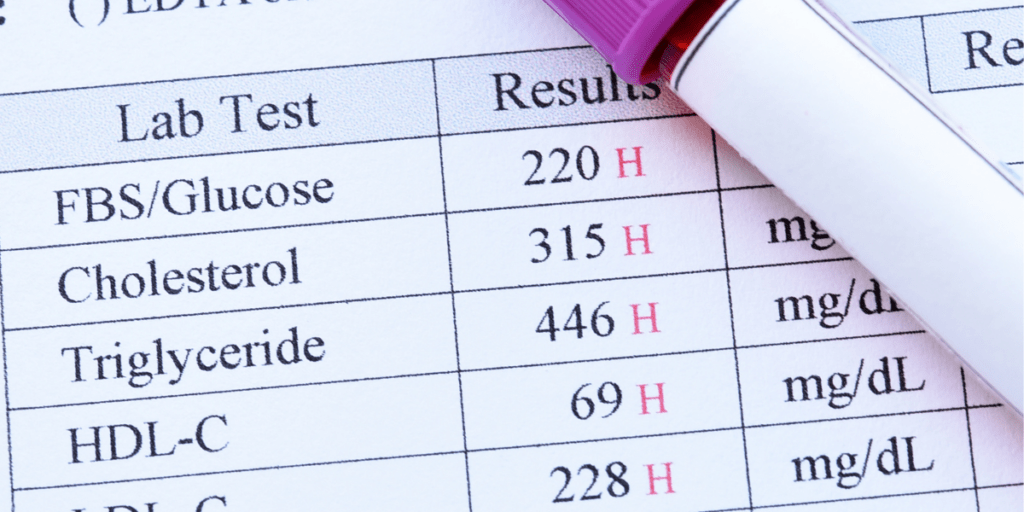
Fasting triglycerides of 150 mg/dL (1.7 mmol/L) or higher. Triglycerides are a type of fat in the blood. When insulin resistance develops, the body produces excess triglycerides, and they accumulate in the bloodstream. Elevated triglycerides are strongly associated with cardiovascular risk.
5. Low HDL cholesterol
HDL is protective cholesterol. Low HDL is defined as:
- Men: less than 40 mg/dL (1.0 mmol/L)
- Women: less than 50 mg/dL (1.3 mmol/L)
People with insulin resistance typically have low HDL alongside elevated triglycerides, a pattern called atherogenic dyslipidemia that significantly increases heart disease and stroke risk.
The Common Thread: Insulin Resistance
Underlying most cases of metabolic syndrome is a condition called insulin resistance. This is the mechanism that ties all five abnormalities together.
Normally, when you eat food containing carbohydrates, your blood glucose rises. Your pancreas responds by releasing insulin, which acts like a key, opening cells to allow glucose to enter. Once glucose is inside the cells, blood glucose levels return to normal.
In insulin resistance, cells do not respond normally to insulin. The key no longer works as effectively. Glucose cannot enter cells easily, so blood glucose remains elevated. Your pancreas attempts to compensate by producing more and more insulin, trying to force glucose into cells.
This hyperinsulinemia (excess insulin in the bloodstream) triggers a cascade of metabolic problems. High insulin levels promote fat storage in the abdomen, raise blood pressure by affecting blood vessel function, increase triglyceride production, lower HDL, and gradually impair the pancreas's ability to produce insulin, eventually leading to prediabetes and diabetes.
Essentially, insulin resistance is the underlying pathophysiology, and the five components of metabolic syndrome are the visible manifestations.
Who Is at Risk in Singapore
Metabolic syndrome affects approximately one in four Singaporean adults, with prevalence rising sharply with age. You are at higher risk if you have:
- Excess abdominal weight - The strongest modifiable risk factor. Abdominal obesity is where insulin resistance begins.
- Family history of diabetes or heart disease - Genetic predisposition to insulin resistance is real. Children of parents with Type 2 diabetes or early cardiovascular events face significantly higher risk.
- Sedentary lifestyle - Physical inactivity accelerates insulin resistance. Conversely, regular activity is one of the most powerful interventions for improving insulin sensitivity.
- Poor diet - Diets high in refined carbohydrates, added sugars, and ultra-processed foods accelerate insulin resistance. Diets high in whole grains, vegetables, and lean protein protect against it.
- Age - Metabolic syndrome risk rises progressively with age, particularly after 40 to 50. This reflects normal changes in metabolism and body composition with ageing, but it is not inevitable.
- Sleep deprivation - Poor sleep significantly impairs insulin sensitivity. This is one reason why chronic sleep deprivation is linked to diabetes and weight gain.
- Ethnicity - Singaporeans of Indian and Malay descent have higher prevalence of metabolic syndrome than those of Chinese descent. This reflects both genetic factors and socioeconomic/lifestyle factors.
- Stress - Chronic stress elevates cortisol, which promotes abdominal fat storage and impairs insulin sensitivity.
- History of gestational diabetes - Women who developed gestational diabetes during pregnancy have an elevated lifetime risk of metabolic syndrome and Type 2 diabetes.
How to Catch It Early
There is only one reliable way to detect prediabetes: a blood test.
The two most commonly used tests are the fasting blood glucose test and the HbA1c test. Fasting blood glucose measures your blood sugar after an overnight fast and gives a snapshot of your current levels. HbA1c measures your average blood sugar over the past two to three months, providing a broader picture of how your body has been managing glucose over time.
At Regis Medical, we recommend both tests as part of routine health screening, particularly for adults aged 40 and above. For those with risk factors such as family history, excess weight, or a sedentary lifestyle, screening should begin earlier.
The Ministry of Health includes diabetes testing as part of Singapore's recommended preventive health guidelines. If you are enrolled in Healthier SG, your enrolled clinic can incorporate regular blood sugar checks into your care plan.
If your results fall in the prediabetic range, our Doctors will discuss what that means in the context of your overall health, lifestyle, and risk profile. This is not a moment for panic. It is a moment for clarity and action.
Why Metabolic Syndrome Matters: The Risk Multiplier
The danger of metabolic syndrome is not just that it contains five risk factors. It is that these five factors interact and amplify each other's effects. The whole is far more dangerous than the sum of its parts.
A person with mildly elevated blood pressure but otherwise healthy numbers has modest cardiovascular risk. A person with mildly elevated blood pressure who also has abdominal obesity, high triglycerides, low HDL, and elevated glucose has exponentially higher risk.
The combination creates a proinflammatory, prothrombotic state, the body is essentially in a chronic state of low-level inflammation and increased clotting tendency. This combination specifically damages blood vessels and accelerates atherosclerosis.
Studies consistently show that people with metabolic syndrome are three times more likely to have a heart attack or stroke and five times more likely to develop Type 2 diabetes, compared to those without metabolic syndrome. That multiplier effect is the clinical significance of the syndrome.
Identifying Metabolic Syndrome: Simple Testing

Diagnosing metabolic syndrome requires basic measurements and blood tests that are straightforward to obtain.
- Waist circumference - Measured in centimeters with a tape measure, ideally in the morning before eating. For Asian populations, ≥ 90 cm in men or ≥ 80 cm in women is the threshold.
- Blood pressure - Measured during a clinical visit. Readings ≥ 130/85 mmHg meet the criterion.
- Fasting blood glucose or HbA1c - A blood test after an 8-hour fast, or HbA1c (which does not require fasting). Fasting glucose ≥ 100 mg/dL (5.6 mmol/L) meets the criterion.
- Lipid panel - A blood test measuring triglycerides and HDL cholesterol. Triglycerides ≥ 150 mg/dL (1.7 mmol/L) and HDL < 40 mg/dL in men or < 50 mg/dL in women meet criteria.
At Regis Medical, comprehensive health screening packages include all of these measurements. If three or more are present in the abnormal range, metabolic syndrome is present. But even if you fall just short of a formal diagnosis, if you have multiple risk factors clustering together, the clinical implication is the same: your risk is elevated and intervention is warranted.
Reversing Metabolic Syndrome
The extraordinary good news about metabolic syndrome is that it is largely reversible through lifestyle change.
- Weight loss - Losing just 5 to 10 per cent of your body weight, particularly from the abdomen, significantly improves insulin sensitivity. Studies show that weight loss improves blood pressure, triglycerides, HDL cholesterol, and glucose control simultaneously. This is why weight management is the foundation of metabolic syndrome treatment.
- Regular physical activity - Exercise improves insulin sensitivity through multiple mechanisms. Both aerobic exercise (walking, running, cycling) and resistance training (weightlifting) are effective. Aim for 150 minutes of moderate activity per week, plus resistance training two to three days per week.
- Dietary change - Focus on whole grains instead of refined carbohydrates, increase vegetable and fruit intake, choose lean proteins, and reduce added sugar and ultra-processed foods. The Mediterranean diet and similar eating patterns have strong evidence for improving metabolic syndrome components.
- Sleep optimisation - Aim for 7 to 9 hours nightly. Poor sleep impairs insulin sensitivity.
- Stress management - Chronic stress elevates cortisol and impairs insulin sensitivity. Regular activity, meditation, time in nature, and social connection all help manage stress.
- Smoking cessation - If you smoke, quitting is one of the most powerful interventions for improving metabolic health.
When these changes are implemented consistently, metabolic syndrome components improve within weeks to months. Many people with metabolic syndrome see complete reversal of the diagnosis if they commit to sustained lifestyle change.
When Medication Is Needed
In some cases, lifestyle intervention alone is not sufficient, particularly in the short term. Your doctor may recommend medications to help lower blood pressure, reduce triglycerides, or improve glucose control while you work on lifestyle changes.
Common medications include antihypertensives for blood pressure, statins for cholesterol and triglycerides, and medications to improve glucose control. These are not a substitute for lifestyle change - they are a bridge that buys time for lifestyle interventions to take effect and reduces immediate cardiovascular risk while change is happening.
The Opportunity Window
Metabolic syndrome is your body's final clear warning before chronic disease takes hold. It is the stage at which you have time. Once diabetes develops, once atherosclerosis causes a heart attack or stroke, time has run out.
If you are over 40, if you carry weight around your abdomen, if you have a family history of diabetes or early cardiovascular events, or if you simply have not had routine screening in the past few years, ask your doctor to assess you for metabolic syndrome. A simple health screening gives you the information you need to decide whether to act.
The changes that reverse metabolic syndrome are not radical. They are sustainable. Walking regularly, eating more vegetables, sleeping better, managing stress—these are not temporary diets or extreme measures. They are simply how people who do not develop diabetes and heart disease live.
Metabolic syndrome is your opportunity to join that group.
Find out more about your metabolic health
Patient-first, Holistic, Dedicated Healthcare
Medical Disclaimer & Limitation of Liability
The content provided in this post is strictly for informational and educational purposes. Just as we fiercely defend our right to publish general health information, we establish an uncompromising boundary: this material is never a substitute for personalised, professional medical advice, diagnosis, or treatment.
Reading this content does not establish a doctor-patient relationship. You possess the sovereign right and responsibility to manage your own health, which means you must consult your own qualified physician before making any medical decisions based on what you read here. We explicitly disclaim all medicolegal liability for any injury, loss, or risk incurred directly or indirectly from the misinterpretation, misuse, or out-of-context application of our online content. Your health is your responsibility; seek individual professional care.