Creatinine and eGFR Explained: Understanding Your Kidney Numbers
Last updated: 28 Sep 2026
Your kidney function test results are back. Two numbers sit at the centre of the report: creatinine and eGFR. One is a number with a unit you don't recognise (micromol per litre). The other is a number followed by a formula you have never seen (mL/min/1.73m²). Both are within range, or one is flagged, and you are not entirely sure what either one is actually measuring.
These two markers are the foundation of kidney health monitoring. Understanding what they represent, how they relate to each other, and what changes in either number actually mean gives you the ability to engage meaningfully with your results rather than simply checking whether they are in bold or not.
Kidney Function Test for peace of mind
Patient-first, Holistic, Dedicated Healthcare
What Your Kidneys Actually Do
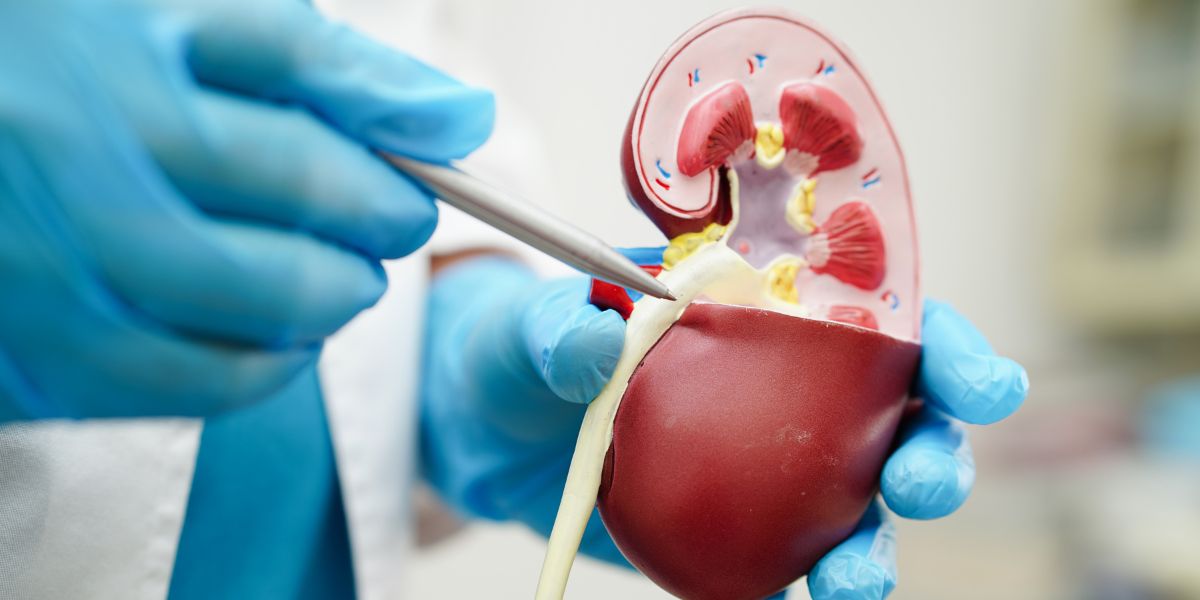
Your kidneys filter your entire blood volume, roughly five litres, about 60 times a day. As blood passes through millions of tiny filtering units called nephrons, waste products are removed and excreted as urine, while essential substances (proteins, blood cells, and most fluid) are retained and returned to circulation.
This filtration rate, how much blood your kidneys clear of waste per minute, is the single most important measure of kidney function. It is called the glomerular filtration rate (GFR), and it is the number your doctor cares about most. The problem is that directly measuring GFR requires a complex, time-consuming procedure that is impractical for routine testing. This is where creatinine comes in.
What Creatinine Actually Is
Creatinine is a waste product generated by your muscles as a byproduct of normal energy metabolism. It is produced at a fairly constant rate, proportional to your muscle mass, and released into your bloodstream continuously.
Your kidneys filter creatinine out of your blood and excrete it in urine. This is the key relationship: if your kidneys are filtering efficiently, creatinine is cleared quickly and blood levels stay low. If your kidneys are filtering poorly, creatinine accumulates in your blood and levels rise.
This makes creatinine a useful indirect marker of kidney function. It is not a measure of anything happening inside the kidney itself. It is a measure of how well the kidney is clearing a substance that is being produced elsewhere. The normal reference range for serum creatinine is typically around 60 to 110 micromol/L for men and 45 to 90 micromol/L for women, though exact ranges vary between laboratories.
The limitation of creatinine alone. Because creatinine production depends on muscle mass, the same creatinine level can mean different things for different people. A heavily muscled man and a frail elderly woman could have identical creatinine readings while having very different actual kidney function. A Korean study following 9,445 people over 14 years found that even creatinine levels within the "normal" range predicted future kidney disease risk, with those in the highest normal quartile having up to 12.8 times greater risk of developing reduced kidney function within the study period. This is why creatinine alone is an imperfect measure, and why eGFR was developed to provide a more accurate estimate.
What eGFR Actually Is
eGFR stands for estimated glomerular filtration rate. It is not measured directly. It is calculated using a formula that incorporates your creatinine level, age, sex, and sometimes ethnicity, to estimate how many millilitres of blood your kidneys are filtering per minute.
The result is expressed as mL/min/1.73m² (millilitres per minute, standardised to a body surface area of 1.73 square metres, which allows comparison between people of different sizes). This standardisation is what makes eGFR more useful than creatinine alone: it accounts for the fact that a given creatinine level means something different depending on your age, sex, and body composition.
How to read your eGFR:
90 or above. Normal kidney function, assuming no other markers of kidney damage (such as protein in urine) are present.
60 to 89. This range requires context. If you are young with no other risk factors, this may simply reflect the normal downward drift that occurs at the lower end of the healthy range. If you are older, an eGFR in this range may be entirely appropriate for your age (as we will discuss below). But if there are other markers of kidney damage, this range is classified as CKD stage 2 (mild reduction).
45 to 59 (Stage 3a). Mild to moderate reduction in kidney function. Monitoring and management of underlying causes (diabetes, hypertension) is important at this stage.
30 to 44 (Stage 3b). Moderate to severe reduction. More frequent monitoring is needed, and referral to a nephrologist may be appropriate depending on the trajectory and cause.
15 to 29 (Stage 4). Severe reduction. Specialist nephrology care is typically required, and planning for potential future kidney replacement therapy begins.
Below 15 (Stage 5). Kidney failure. Dialysis or transplant is usually needed.
Why "Normal for Your Age" Matters
This is one of the most important and most frequently misunderstood aspects of eGFR interpretation. Kidney function naturally declines with age, even in people with no kidney disease at all. The National Kidney Foundation notes that eGFR declines progressively across the lifespan as a normal part of ageing, separate from any pathological process.
This means an eGFR of 75 in a 30 year old is a different clinical situation from an eGFR of 75 in a 75 year old. The younger person's result deserves further evaluation. The older person's result may fall entirely within the expected range for their age. Your doctor interprets your eGFR alongside your age-specific expected range, not just against the single "90 or above is normal" threshold.
This is precisely why a single eGFR reading is less informative than a trend. An eGFR that has been stable at 65 for five years is a very different clinical picture from an eGFR that dropped from 90 to 65 over the same period, even though the current number is identical. This is why regular kidney function testing, and comparing your results over time, matters more than any single value in isolation.
What Can Affect Your Numbers Beyond Kidney Function
Several factors influence creatinine and eGFR readings without reflecting actual changes in kidney health.
Muscle mass. Bodybuilders and very muscular individuals can have higher creatinine levels (and therefore lower calculated eGFR) despite having perfectly healthy kidneys, simply because they produce more creatinine from their larger muscle mass. Conversely, individuals with low muscle mass (from illness, ageing, or malnutrition) can have deceptively low creatinine and normal-looking eGFR despite reduced actual kidney function.
Dehydration. Acute dehydration temporarily concentrates your blood and can transiently raise creatinine, producing a falsely low eGFR reading. If your result looks unexpectedly abnormal and you were significantly dehydrated at the time of testing, repeating the test after proper hydration is reasonable.
High protein intake or recent meat consumption. A very large meat meal shortly before testing can transiently affect creatinine, though this effect is generally small.
Pregnancy. Kidney filtration increases during pregnancy, which can lower creatinine and elevate eGFR compared to non-pregnant baseline values.
Certain medications. Some medications (including certain antibiotics and supplements like creatine) can affect creatinine levels without reflecting true kidney function changes.
This is why your doctor considers the full clinical picture, your hydration status, muscle mass, medications, and the trend over time, rather than reacting to a single number in isolation.
Why This Matters More in Singapore Than You Might Think
A Singapore study of 3,979 people undergoing health screening found that the prevalence of moderate to severe chronic kidney disease (stage 3 to 5) was 3.7 per cent. This means that out of every group of 30 people walking into a health screening in Singapore, roughly one has significantly reduced kidney function, most of them without knowing it.
CKD in its early to moderate stages produces no symptoms. There is no pain, no obvious sign, nothing that would prompt someone to seek medical attention. The only way this 3.7 per cent were identified was through routine blood testing during health screening. Without that test, they would have continued unaware, potentially for years, while the underlying causes (most commonly diabetes and hypertension) continued to affect their kidneys.
Beyond Creatinine and eGFR: The Complete Picture
Creatinine and eGFR are the foundation, but a complete kidney assessment includes additional markers. Urine albumin-to-creatinine ratio (ACR) detects protein leaking into your urine, which can be an early sign of kidney damage even when eGFR is still in the normal range. This is particularly important for people with diabetes or hypertension, where protein leakage often precedes any drop in eGFR. Electrolytes (sodium, potassium) assess whether kidney function is affecting your body's mineral balance. And blood pressure is assessed alongside kidney tests because the relationship between hypertension and kidney damage runs in both directions: high blood pressure damages kidneys, and damaged kidneys struggle to regulate blood pressure. At Regis Medical, a kidney function test includes creatinine, eGFR, and electrolytes as standard, with urine ACR added when clinically indicated, particularly for patients with diabetes, hypertension, or a family history of kidney disease.
Know Your Numbers, Know Your Trend
A single creatinine and eGFR reading tells you where you stand today. A series of readings over time tells you where you are heading. Both matter, but the trend matters more.
If you have never had your kidney function tested, or if it has been several years since your last check, a health screening at Regis Medical provides both the baseline and the context to interpret it correctly. A conversation at our GP clinic ensures your numbers are read in light of your age, your muscle mass, your medical history, and your risk factors, not just compared to a generic reference range.
Your kidneys work silently, filtering your blood tens of thousands of times without you ever noticing. The only way to know how well they are doing that job is to ask, through a simple blood test.
Kidney Function Test for peace of mind
Patient-first, Holistic, Dedicated Healthcare
Medical Disclaimer & Limitation of Liability
The content provided in this post is strictly for informational and educational purposes. Just as we fiercely defend our right to publish general health information, we establish an uncompromising boundary: this material is never a substitute for personalised, professional medical advice, diagnosis, or treatment.
Reading this content does not establish a doctor-patient relationship. You possess the sovereign right and responsibility to manage your own health, which means you must consult your own qualified physician before making any medical decisions based on what you read here. We explicitly disclaim all medicolegal liability for any injury, loss, or risk incurred directly or indirectly from the misinterpretation, misuse, or out-of-context application of our online content. Your health is your responsibility; seek individual professional care.