Creatinine and eGFR Explained: Understanding Your Kidney Numbers
Last updated: 28 Sep 2026

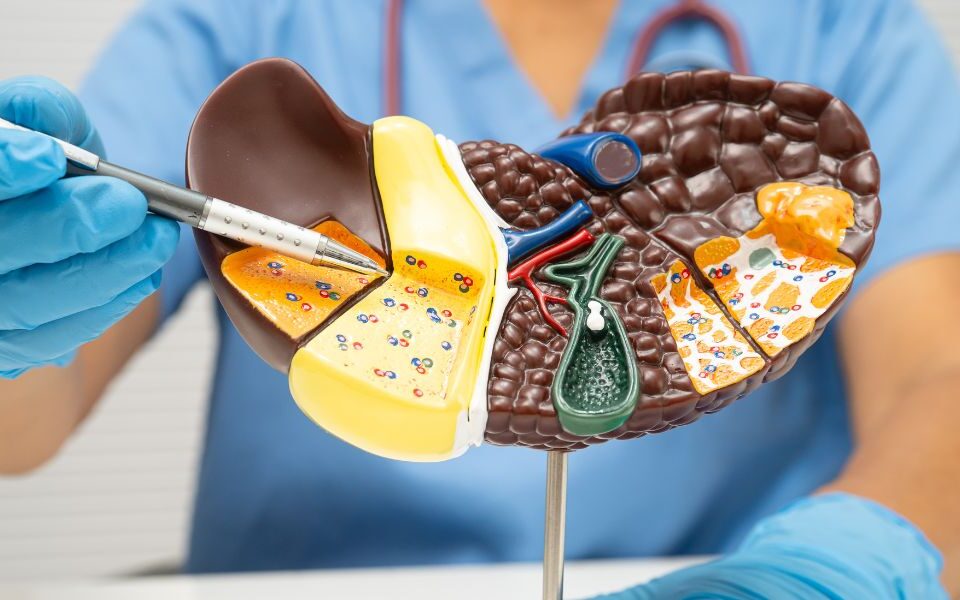
If someone told you that 40 per cent of Singaporeans in a community health study had a liver condition, you would assume the country would be talking about it. Screening for it. Running public health campaigns about it.
Fatty liver disease does not receive that attention. It is the most common chronic liver disease in the world, affecting approximately 38 per cent of the global population. A Singapore community study found that 40 per cent of participants had fatty liver on ultrasound. And a 2024 Biotech Connection Singapore review noted that Singapore's population remains largely unaware of the disease's prevalence, its metabolic associations, and the importance of early detection.
The reason for this disconnect is simple: fatty liver disease produces no symptoms. Not in its early stages. Not in its moderate stages. Often not even in its advanced stages until irreversible damage has occurred. It is a condition that develops silently, progresses silently, and is typically discovered either incidentally on a blood test or, in the worst cases, when it has already caused cirrhosis or liver cancer.
Liver Function Test for peace of mind
Patient-first, Holistic, Dedicated Healthcare
What Fatty Liver Disease Is
Metabolic dysfunction-associated steatotic liver disease (MASLD), previously known as non-alcoholic fatty liver disease (NAFLD), is defined by the accumulation of excess fat in more than 5 per cent of liver cells in individuals who do not drink excessive alcohol. It is not caused by alcohol. It is caused by the same metabolic dysfunction that drives diabetes, high cholesterol, and cardiovascular disease: insulin resistance, visceral fat, and chronic low-grade inflammation.
The name change from NAFLD to MASLD in 2023 reflects a fundamental shift in understanding. This is not merely a liver disease. It is a metabolic disease that manifests in the liver. The liver is not the cause. It is the victim, the organ where systemic metabolic dysfunction becomes visible earliest.
Why It Is So Common in Singapore
Singapore's metabolic landscape creates the perfect conditions for fatty liver disease to thrive.
Insulin resistance and diabetes. Up to 75 per cent of individuals with Type 2 diabetes also have MASLD. Up to 70 per cent of diabetic patients in Singapore were found to have NAFLD, with up to 20 per cent showing clinically significant fibrosis. As Singapore's diabetes prevalence continues to rise, the burden of fatty liver disease will grow with it.
Visceral fat accumulation. As we discussed in our blog on visceral fat, Asian populations accumulate visceral fat at lower BMIs than Caucasians. This means metabolically significant fatty liver can develop in Singaporeans with normal body weight, a concept that directly connects to the skinny fat phenotype we have written about.
Dietary patterns. High refined carbohydrate intake, excessive sugar consumption (including from sweetened beverages), and low fibre intake all promote hepatic fat accumulation. Fructose, in particular, is processed directly by the liver and converted to fat when consumed in excess.
Sedentary lifestyles. Physical inactivity promotes insulin resistance, visceral fat accumulation, and impaired hepatic fat metabolism, the trifecta that drives MASLD. As we covered in our blog on sedentary lifestyles in Singapore, nearly half of Singaporean adults are classified as sedentary.
Why There Are No Symptoms
Your liver has enormous functional reserve. It can lose a significant proportion of its capacity before you notice anything clinically. Fat can accumulate in 20, 30, or 40 per cent of liver cells while the remaining healthy cells continue to perform all necessary functions without detectable impairment.
This is why fatty liver disease does not produce abdominal pain, nausea, jaundice, or any outward sign in its early and moderate stages. A 2024 study found that 59.2 per cent of MASLD patients were completely unaware of their liver fat and fibrosis status. They felt fine. They had no reason to suspect a liver condition. And their lack of awareness was directly associated with poor adherence to the lifestyle changes that could reverse the disease.
The first symptom, when one eventually appears, is usually fatigue. Not ordinary tiredness but a deeper, persistent exhaustion that does not respond to rest. By this point, the disease has often progressed beyond simple fat accumulation into inflammation (steatohepatitis) or early fibrosis (scarring).
More advanced symptoms, including abdominal swelling, jaundice, easy bruising, and confusion, indicate cirrhosis, the stage at which liver damage is irreversible. The goal of early detection is to identify and intervene long before this stage is reached.
How Fatty Liver Disease Progresses
MASLD exists on a spectrum, and not everyone with fatty liver will progress to serious disease. But understanding the stages helps explain why early detection matters.
Stage 1: Simple steatosis (fat accumulation). Fat is present in the liver but there is no significant inflammation or scarring. This is the earliest, most common, and most reversible stage. Many people remain at this stage indefinitely and never progress. At this stage, liver enzymes (particularly ALT) may be mildly elevated or, in some cases, completely normal.
Stage 2: Steatohepatitis (MASH, formerly NASH). Fat accumulation has triggered inflammation. Liver cells are actively being damaged. ALT and AST are typically elevated. This stage carries a meaningful risk of progression to fibrosis.
Stage 3: Fibrosis. Chronic inflammation has produced scar tissue in the liver. The scarring is initially reversible if the underlying cause is addressed. Advanced fibrosis is harder to reverse.
Stage 4: Cirrhosis. Extensive scarring has permanently altered the liver's architecture, impairing its ability to function. Cirrhosis is largely irreversible and significantly increases the risk of liver failure and hepatocellular carcinoma (liver cancer). MASLD-related liver cancer cases have more than doubled globally between 1990 and 2021.
The critical insight: progression from Stage 1 to Stage 4 typically takes years to decades. There is an enormous window for intervention. But that window is only useful if the disease is detected in the first place.
The Leading Cause of Death Is Not What You Expect
Here is the finding that surprises most people: the leading cause of death in patients with MASLD is not liver failure. It is cardiovascular disease.
The same metabolic dysfunction that drives fat into the liver, insulin resistance, chronic inflammation, dyslipidaemia, and visceral fat, also drives atherosclerosis, hypertension, and heart disease. MASLD is not an isolated liver condition. It is a marker of systemic metabolic disease. Patients with fatty liver have significantly elevated cardiovascular risk, independent of their other metabolic factors.
This is why a diagnosis of fatty liver should prompt a comprehensive metabolic assessment, not just liver monitoring. Cholesterol screening, diabetes screening, blood pressure measurement, and heart screening are all clinically indicated when fatty liver is identified.
How Fatty Liver Is Detected
Because MASLD produces no symptoms, detection relies on testing.
Liver function tests (ALT, AST, GGT). As we explained in our blog on liver markers, elevated ALT is the most common biochemical signal of fatty liver. However, ALT can be normal in some patients with MASLD, which means a normal liver function test does not completely exclude fatty liver. It does, however, exclude significant liver inflammation in most cases.
Ultrasound. Liver ultrasound can detect moderate to severe fatty liver by showing increased echogenicity (brightness) of the liver tissue. It is non-invasive and widely available. Your GP can refer you for liver ultrasound if liver enzymes are elevated or if your metabolic risk profile suggests fatty liver.
FibroScan (transient elastography). Measures liver stiffness, which correlates with the degree of fibrosis. This is increasingly used to assess whether fatty liver has progressed to scarring, without requiring a liver biopsy.
The most practical approach for most Singaporeans is a liver function test as part of a routine health screening. If ALT or GGT is elevated, or if you have metabolic risk factors (prediabetes, elevated cholesterol, visceral obesity), further assessment with ultrasound can be arranged.
Fatty Liver Is Reversible. But Only If You Know You Have It.
At stages 1 and 2, fatty liver is entirely reversible through lifestyle intervention. The same changes that improve metabolic health reverse hepatic fat accumulation.
Weight loss. A reduction of 5 to 10 per cent of body weight consistently reduces liver fat, improves liver enzymes, and, in some studies, reverses fibrosis. This is the most evidence-based intervention available.
Dietary change. Reducing refined carbohydrates, fructose, and processed foods while increasing fibre, protein, and healthy fats directly reduces the substrate that the liver converts to fat.
Exercise. Regular physical activity reduces liver fat independently of weight loss by improving insulin sensitivity and hepatic fat metabolism. Resistance training and aerobic exercise are both effective.
Reducing alcohol. Even in MASLD (which is not caused by alcohol), alcohol adds additional metabolic burden to an already-stressed liver.
Managing metabolic comorbidities. Treating insulin resistance, controlling cholesterol, and managing blood pressure all support liver recovery and reduce the cardiovascular risk that accompanies MASLD.
The Test That Catches It Before It Catches You
Fatty liver disease is silent. It is common. It is reversible when caught early. And it is detectable through a simple liver function test that is part of every comprehensive health screening at Regis Medical.
If you have never had your liver function tested, if you carry weight around your midsection, if your blood sugar or cholesterol is trending upward, or if you have a sedentary lifestyle and a diet that is heavy on refined carbohydrates, fatty liver is a possibility that deserves assessment rather than assumption.
A visit to our GP clinic provides the screening, the context, and the plan. Your liver cannot tell you it is in trouble. Your blood test can.
Liver Function Test for peace of mind
Patient-first, Holistic, Dedicated Healthcare
Medical Disclaimer & Limitation of Liability
The content provided in this post is strictly for informational and educational purposes. Just as we fiercely defend our right to publish general health information, we establish an uncompromising boundary: this material is never a substitute for personalised, professional medical advice, diagnosis, or treatment.
Reading this content does not establish a doctor-patient relationship. You possess the sovereign right and responsibility to manage your own health, which means you must consult your own qualified physician before making any medical decisions based on what you read here. We explicitly disclaim all medicolegal liability for any injury, loss, or risk incurred directly or indirectly from the misinterpretation, misuse, or out-of-context application of our online content. Your health is your responsibility; seek individual professional care.