Menstrual Pain Treatment and Relief Singapore
by: Dr. Tan Hue Min - MBBS, MMed (FM), Family Physician, Regis Medical
Last updated: 20 Aug, 2026
Menstrual pain is one of the most common health concerns women face. Around 80 per cent of all women will experience menstrual pain at some point in their lifetime. For 5 to 10 per cent, the pain is severe enough to interfere with daily life, work, and social activities.
A 2017 YouGov survey found that 87 per cent of Singaporean women had experienced menstrual pain. Among those who were employed, 78 per cent reported that their menstrual pain had affected their ability to work. Despite this, menstrual pain remains widely normalised: something to endure rather than investigate, manage, or treat.
The challenge is distinguishing between menstrual pain that is uncomfortable but normal and menstrual pain that signals an underlying condition requiring attention. Understanding the difference, and knowing when to see your doctor, prevents years of unnecessary suffering and catches conditions like endometriosis before they cause permanent damage.
Jump to
Manage Menstrual Pain with Regis Medical
Patient-first, Holistic, Dedicated Healthcare
What is Menstrual Pain?
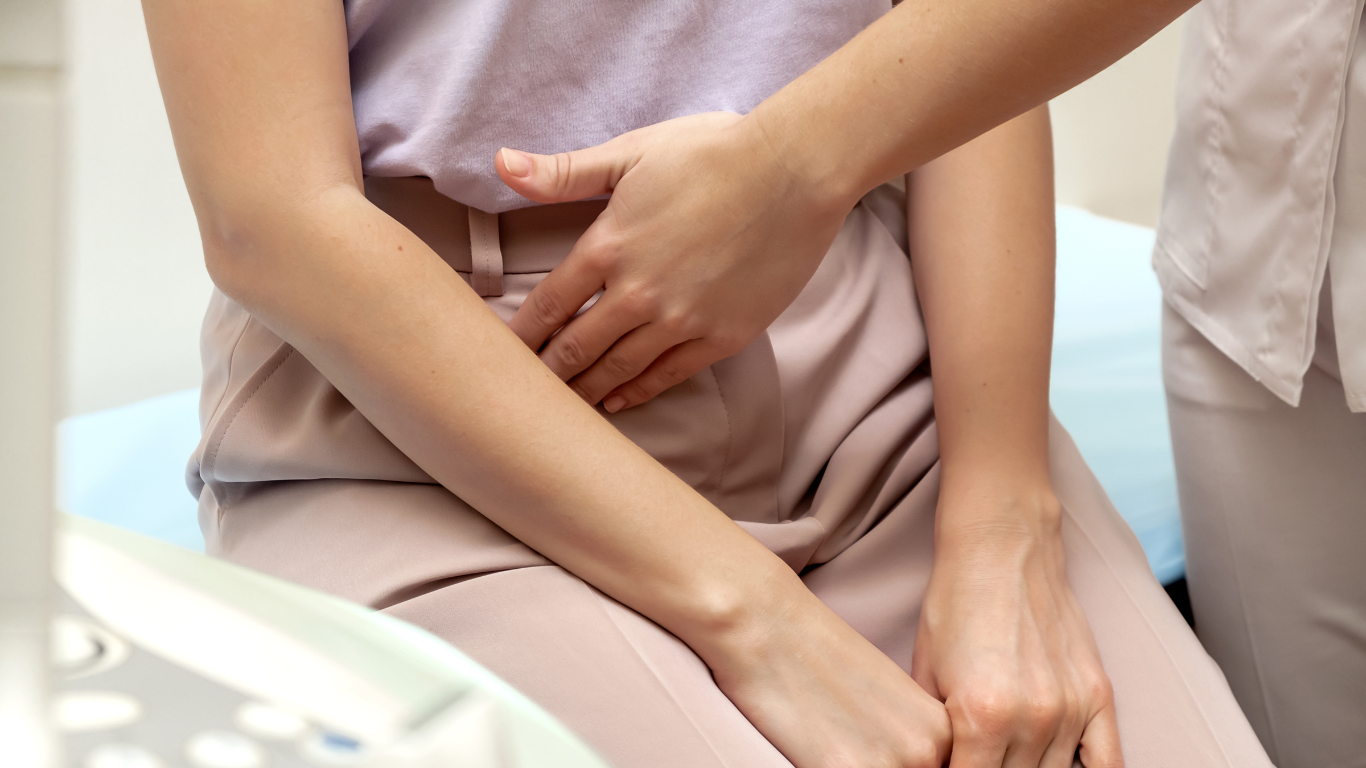
Menstrual pain, or dysmenorrhoea, refers to painful muscle cramps that are generally felt in the lower abdomen and can spread to the lower back and thighs. The severity and frequency of the pain varies between women and between cycles. It may come in the form of intense spasms or as a dull, constant ache. Menstrual pain typically begins just before or at the start of your period and usually lasts one to three days.
During menstruation, your uterus contracts to expel its lining. These contractions are driven by prostaglandins, chemicals that cause the uterine muscles to contract and relax. Higher levels of prostaglandins are associated with more intense cramping. Prostaglandins also affect the gut, which is why many women experience loose stools, nausea, or bloating during their period, as we discussed in our blog on the 4 stages of the menstrual cycle.
Types of Menstrual Pains
Menstrual pain can be categorised into two types: primary and secondary.
Primary Dysmenorrhea
Primary dysmenorrhea refers to menstrual pain that is not caused by any other underlying medical condition. This is the most common type of menstrual pain experienced. During your menstrual period, your uterus will contract to expel its lining. Your uterus may produce prostaglandins excessively, a type of chemical that causes the muscles of your uterus to contract and relax, causing cramps.
Secondary Dysmenorrhea
Secondary dysmenorrhea refers to menstrual pain that is caused by other underlying medical conditions. This type of period pain tends to happen later in life, commonly affecting women in their thirties and forties.
Medical conditions that may cause period pain include:
- Endometriosis. The cells that are similar to the lining of the uterus grow in other places, such as the fallopian tubes and ovaries, causing intense pain when they shed.
- Fibroids. Fibroids are non-cancerous growths that grow in or around the uterus. These fibroids can cause your periods to be heavy and painful.
- Pelvic inflammatory disease. This disease is caused by an infection of the female reproductive system, consisting of the womb, fallopian tubes and ovaries. This results in severe inflammation, causing pain.
- Adenomyosis. The tissues that usually lines the uterus grows into the muscular wall of the uterus. This can cause your periods to become heavy and painful.
Period pain can also be a result of using an intrauterine device (IUD). An IUD is a type of contraceptive device that is inserted into the uterus. For the first 3 to 6 months after inserting the device, your periods may be heavier and more painful.
Risk Factors for Menstrual Pain
Certain factors can increase your risk of menstrual pain during your periods. These include:
- Being under the age of 30
- Started puberty early
- Heavy bleeding during periods
- Irregular menstrual bleeding
- Have a family history of menstrual cramps
- Smoking
When should I see a doctor?
While menstrual pain is a common occurrence, you should visit a doctor if your menstrual pain has become severe enough to interfere with your daily life and ability to carry out everyday activities.
If you experience the following symptoms, you may wish to seek a doctor’s opinion:
- Three consecutive painful menstrual periods
- Passing blood clots
- Cramps that come along with diarrhoea and nausea
- Pelvic pain when not menstruating
- Pain that persists after your IUD insertion
Pelvic pain and sudden cramps could suggest a possible infection. Untreated infections could lead to serious problems, such as damage to your pelvic organs and even infertility.
You should seek immediate medical help if you experience the following symptoms:
- Fever
- Severe pelvic pain
- Sudden pain
- Foul-smelling vaginal discharge
Diagnosing Menstrual Pain
To identify whether your menstrual pain is primary (normal prostaglandin-driven cramping) or secondary (caused by an underlying condition), your doctor will take a thorough medical history, including the nature, timing, progression, and severity of your pain, your menstrual pattern, your sexual history, and any associated symptoms.
A pelvic examination may be included to check for abnormalities in your reproductive organs and signs of infection.
If your doctor suspects an underlying cause, further investigation may be recommended. This may include a female hormonal test to assess your hormonal profile and ovulatory status, an ultrasound scan to check for fibroids, adenomyosis, ovarian cysts, or endometriomas, and in some cases, referral for MRI or laparoscopy for definitive diagnosis of endometriosis.
A STD screen (particularly chlamydia and gonorrhoea) may be recommended if pelvic inflammatory disease is suspected, as untreated STIs are the most common cause of PID.
Treatment for Menstrual Pain
Treatment depends on whether the pain is primary or secondary, and on its severity.
Self-Care and Lifestyle Measures
For mild to moderate primary dysmenorrhoea, the following approaches are effective for most women.
- Heat therapy - Applying heat to your lower abdomen and lower back is one of the simplest and most effective pain relief methods. A hot-water bottle, heating pad, warm towel, or warm bath can significantly reduce cramping.
- Over-the-counter pain relief - Nonsteroidal anti-inflammatory drugs (NSAIDs) such as ibuprofen and naproxen are the most effective over-the-counter options because they reduce prostaglandin production directly, addressing the cause of the pain rather than just masking it. Paracetamol provides pain relief but does not affect prostaglandin levels. NSAIDs are most effective when taken at the first sign of pain or cramping, before it builds.
- Rest and sleep - Adequate rest during the most painful days can reduce pain intensity. Your body's pain sensitivity is influenced by fatigue, so sufficient sleep supports pain management.
- Regular exercise - Women who exercise regularly typically experience less severe menstrual pain. Exercise releases endorphins (natural painkillers) and improves pelvic blood flow. Moderate-intensity exercise such as walking, swimming, or yoga is most beneficial.
- Dietary adjustments - Reducing caffeine, alcohol, salt, and sugar intake in the days before and during your period can help prevent bloating and water retention, which can worsen cramping. As we discussed in our blog on the luteal phase, your metabolic rate increases slightly in the second half of your cycle, and cravings for carbohydrates and sugar are physiologically driven.
- Supplements - Certain vitamins and supplements may provide modest benefit: vitamin B1, vitamin B6, vitamin E, omega-3 fatty acids, calcium, and magnesium have evidence for reducing menstrual pain in some studies. These are most effective as part of a broader dietary approach rather than as standalone treatments.
Acupuncture
Acupuncture may help relieve menstrual pain by modulating pain signalling, reducing inflammation, and improving pelvic blood flow. At our Holland Village clinic, in-house acupuncture is available for women seeking a complementary approach to menstrual pain management, working alongside conventional treatment.
Medical Treatment
If self-care measures are insufficient, your doctor may recommend the following.
Stronger prescription pain relief. For women whose pain does not respond to over-the-counter NSAIDs, prescription-strength options may be prescribed.
Hormonal birth control. Hormonal contraception (pill, patch, vaginal ring, injection, implant, or hormonal IUD) can reduce menstrual pain significantly by preventing ovulation, thinning the uterine lining, and reducing prostaglandin production. Many women on hormonal contraception experience lighter, shorter, and less painful periods.
Your Period Pain Deserves Attention
Period pain is common, but "common" does not mean "acceptable at any severity." Mild cramping that responds to a hot-water bottle and ibuprofen is normal. Pain that prevents you from going to work, sends you to bed for days, or is progressively worsening over months and years is not.
If your menstrual pain has been dismissed as "just your period" but is genuinely affecting your quality of life, it deserves investigation. As we discussed in our blog on hormonal imbalance symptoms, many conditions that cause severe period pain are diagnosable, treatable, and, in many cases, entirely manageable once identified.
At our women's health clinic, our Doctors take menstrual pain seriously. We provide the clinical assessment, appropriate blood tests and imaging referrals, and a management plan tailored to your specific situation. A health screening can assess for underlying conditions including thyroid dysfunction and iron deficiency, both of which can affect menstrual patterns and compound period-related symptoms.
You should not have to plan your life around your period. If you are, it is time to find out why.
Manage Menstrual Pain with Regis Medical
Patient-first, Holistic, Dedicated Healthcare
Disclaimer:
The information on this website, including but not limited to, text, graphics, images, videos and all other materials contained on this website is for informational purposes only. None of the material is meant to replace a certified and registered Doctor's professional medical advice, diagnosis, and treatment.
No warranties or representations are given in respect of the medical information. Regis Medical, Regis Medical’s staff, and the website's operator will not be held liable if a user suffers any injury or loss after relying upon the medical information on this website.
Any devices used for technology-enhanced therapies are intended for use only for general well-being purposes or to encourage or maintain a healthy lifestyle and is not intended to be used for any medical purpose (such as the detection. diagnosis, monitoring, management or treatment of any medical condition or disease). Any health-related information provided by this device or software should not be treated as medical advice. Please consult a certified and registered Doctor for any medical advice required.
“77% Of Women in Singapore Who Have Suffered from Period Pain Say It Has Affected Their Ability to Wo.” YouGov | 77% of Women in Singapore Who Have Suffered from Period Pain Say It Has Affected Their Ability to Wo, YouGov, 12 Oct. 2017, https://sg.yougov.com/en-sg/news/2017/10/12/period-pain-suffer/.
“Dysmenorrhea.” Dysmenorrhea: What It Is, Treatments, Causes, Cleveland Clinic, 20 Nov. 2020, https://my.clevelandclinic.org/health/diseases/4148-dysmenorrhea.
Gupta, Pratima. “Period Pain.” Period Pain - Women's Health Concern, Women's Health Concern, 15 Dec. 2020, https://www.womens-health-concern.org/help-and-advice/factsheets/period-pain/.
Johnson, Traci. “Menstrual Cramps.” Menstrual Cramps (Dysmenorrhea): Symptoms, Causes, Treatment, Prevention, WebMD, 24 Aug. 2022, https://www.webmd.com/women/menstrual-cramps.
Martel, Janelle. “What Causes Painful Menstrual Periods and How Do I Treat Them?” Painful Menstrual Periods, Healthline Media, 5 May 2020, https://www.healthline.com/health/painful-menstrual-periods.
“Menstrual Cramps.” Menstrual Cramps - Diagnosis and Treatment, Mayo Clinic, 30 Apr. 2022, https://www.mayoclinic.org/diseases-conditions/menstrual-cramps/diagnosis-treatment/drc-20374944.
“Menstrual Cramps.” Menstrual Cramps - Symptoms and Causes, Mayo Clinic, 30 Apr. 2022, https://www.mayoclinic.org/diseases-conditions/menstrual-cramps/symptoms-causes/syc-20374938.
Nwadike, Valinda. “What Helps Menstrual Cramps: 6 Home Remedies and OTC Options to Manage Pain.” Menstrual Cramp Home Remedies to Manage Pain, Healthline Media, 5 Oct. 2021, https://www.healthline.com/health/womens-health/menstrual-cramp-remedies.
“Period Pain.” Period Pain - NHS, NHS Choices, 7 Aug. 2017, https://www.nhs.uk/conditions/period-pain/#:~:text=Period%20pain%20is%20common%20and,be%20dull%20but%20more%20constant.
“Period Pain.” Period Pain | Menstrual Cramps, U.S. National Library of Medicine, 24 June 2020, https://medlineplus.gov/periodpain.html.