Bloated All the Time? Common Causes and When to Get Tested
by: Dr. Paul Chang – MBBS, GDFM, MBA, General Practitioner, Regis Medical
Last updated: 5 Aug 2026
Bloating after a heavy meal or a long-haul flight is normal. Bloating that happens most days, persists for weeks, and doesn't improve despite dietary changes is not, and it's worth investigating properly rather than cycling through elimination diets indefinitely.

Take the First Step to Stop Bloating
Patient-first, Holistic, Dedicated Healthcare
What Chronic Bloating Actually is?
Occasional bloating resolves on its own. Chronic bloating doesn't. If your symptoms are frequent, persistent, and unresponsive to dietary modification, the cause is likely physiological rather than behavioural, and treatable once identified.
Common Causes Worth Evaluating
1. H. Pylori Infection
H. pylori is a bacterial infection that lives in the stomach lining. And it's surprisingly common. A systematic review published in Gastroenterology found that roughly half the world's population carries this bacterium, with most people completely unaware they have it.
Here's the thing about H. pylori: it doesn't always cause dramatic symptoms. There's often no sharp pain or vomiting. For many carriers, the only noticeable sign is a persistent, low-grade bloating. Maybe some mild indigestion, or feeling full after eating just a small amount. It's the kind of thing you'd easily write off as "that's just how my stomach is."
The problem is that left untreated, H. pylori is a recognised risk factor for gastritis, stomach ulcers, and gastric cancer. The reassuring part? A urea breath test can detect it in about 10 minutes, and treatment is typically a straightforward course of antibiotics.
2. Gut Microbiome Imbalance
Your gut is home to trillions of bacteria, and the balance between helpful and harmful ones plays a huge role in how you digest food, how your immune system functions, and even how you feel mentally. When that balance tips the wrong way (a state called dysbiosis), bloating is usually one of the first symptoms to show up.
What's interesting is how quickly the microbiome can change. A study published in Nature showed that gut bacteria composition can shift within just 24 to 72 hours of dietary changes. But chronic dysbiosis, the kind that causes ongoing symptoms, doesn't usually fix itself with a simple diet tweak or a random probiotic from the pharmacy.
Taking off-the-shelf probiotics without knowing what your gut actually needs is a bit like taking supplements without ever doing a blood test. It might help, or it might be completely beside the point. A gut microbiome test gives you the actual data, so any changes you make are targeted and specific to you.
3. Nutrient Malabsorption
When your gut isn't working properly, it doesn't just cause discomfort. It can also stop your body from absorbing the nutrients it needs, even if your diet is perfectly fine on paper.
Common deficiencies linked to poor gut function include iron, ferritin, vitamin D, B12, folate, and magnesium. The symptoms of these deficiencies can overlap with bloating in confusing ways. You might feel exhausted, foggy-headed, or notice your hair thinning, and assume it's all one big problem when it's actually several things compounding each other.
A vitamin and mineral deficiency panel test helps untangle what's going on and points our doctor toward the right supplementation, rather than guesswork.
4. Stress and the Gut-Brain Connection
If your bloating gets noticeably worse during busy periods at work, that's not a coincidence. The connection between your brain and your gut is very real and very physical.
Research in the Journal of Physiology and Pharmacology has shown that when cortisol (your main stress hormone) goes up, it directly slows down how quickly food moves through your digestive system. It also changes the makeup of your gut bacteria. So you're not imagining it when you feel more bloated during a stressful week. Your body is literally digesting differently.
For professionals working long hours in Singapore, where eating lunch at your desk and powering through the afternoon is the norm, this is an underappreciated factor. If stress is something you suspect is playing a role, a cortisol level test can give you an objective picture alongside your gut-focused investigations.
5. Hormonal Fluctuations
For women, especially between the mid-30s and 50s, hormones can have a significant impact on digestion. Both oestrogen and progesterone affect gut motility and water retention, which explains why bloating often flares around menstruation, during perimenopause, or alongside conditions like PCOS.
This doesn't mean hormonal bloating is something you just have to put up with. If it follows a consistent pattern and genuinely affects your quality of life, investigating it alongside a hormonal panel is worthwhile. Understanding whether hormonal imbalance is contributing to your gut symptoms helps our doctors address the full picture, not just one piece of it.
6. Liver or thyroid dysfunction
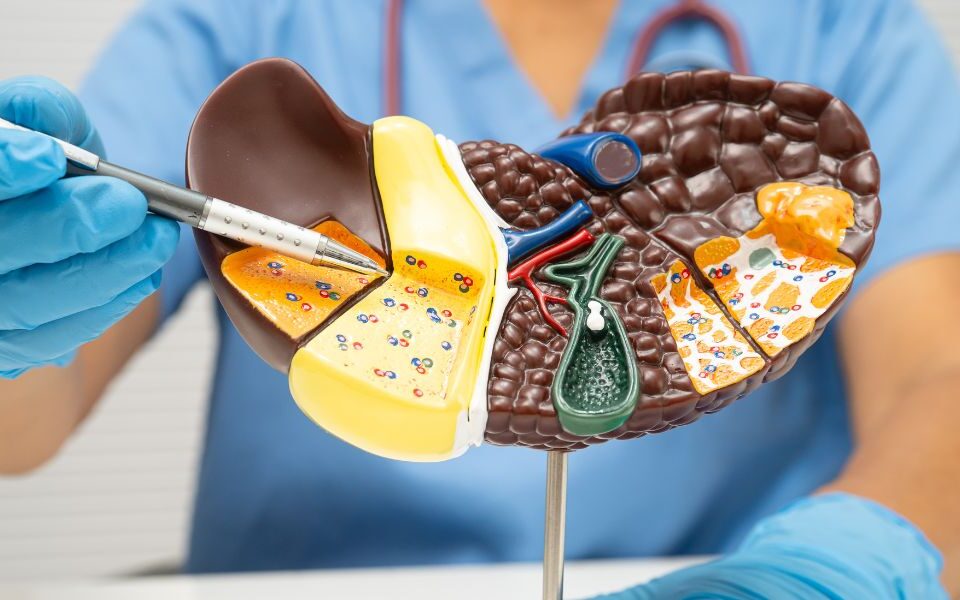
Suboptimal liver function reduces bile production and impairs fat digestion. An underactive thyroid slows gut transit and contributes to bloating alongside weight gain and fatigue. Secondary considerations, but relevant when primary gut causes have been ruled out.
These aren't the first things our doctors would test for, but if the more common gut-related causes have been ruled out and you're still symptomatic, a liver function test or thyroid function test can help close the gap.
When Should You See a Doctor and get tested for Bloating?
Seek assessment if you have:
- Bloating three or more days per week for several weeks
- Change in bowel habit (persistent diarrhoea or constipation)
- Unintentional weight loss
- Blood in stool or consistently dark stools (black stools as well)
- Concurrent heartburn, reflux, or upper abdominal pain
- Persistent fatigue or cognitive fog
- Family history of gastrointestinal conditions or colorectal cancer
- No meaningful improvement despite dietary changes
- No meaningful improvement despite trial of medications such as PPIs (proton pump inhibitors) for 1 week, or symptoms that return as soon as medications are stopped.
If any of these apply, it's worth getting checked rather than continuing to ride it out. The tests involved are simple, non-invasive, and can be done at our GP clinic. You don't necessarily need a specialist referral to get the process started.
Possible Relevant Test (Not Exhaustive)
This is the question we hear most often: "I know something's not right, but I don't know what to test for." Here's a practical starting point.
- Urea Breath Test detects active H. pylori infection. It's non-invasive and takes only 30 minutes. For patients with bloating and upper digestive discomfort, this is often the first test we recommend.
- Gut Microbiome Test analyses your gut bacteria through a stool sample. It identifies imbalances, inflammation markers, and digestive health patterns, and is particularly useful for chronic bloating, IBS-like symptoms, or anyone who wants a data-driven approach to improving their gut health.
- Stool Tests cover a range of investigations, including the H. pylori stool antigen test (which confirms active infection through a stool sample) and the faecal occult blood test, which screens for hidden blood that could point to polyps, inflammation, or early-stage colorectal conditions.
- Vitamin and Mineral Deficiency Panel checks key nutrients often affected by poor gut absorption, including iron, ferritin, vitamin D, B12, folate, and magnesium.
- Thyroid Function Test is worth considering if your bloating comes with unexplained weight gain, fatigue, or sensitivity to cold. An underactive thyroid can slow digestion and contribute to that heavy, sluggish feeling.
- Liver and kidney function tests, secondary, when primary gut causes are excluded.
- Full blood count is good as an adjunctive blood test to make sure obvious anaemia is excluded.
Our doctor will guide you toward the right combination based on your symptoms and medical history. For many patients, a comprehensive gut health screening covers the key bases in a single visit. A GP clinic can initiate most of these without specialist referral. Gastroenterology referral and endoscopy are arranged where clinically indicated.
A Note On Waiting
Chronic bloating rarely resolves without identifying the underlying cause. H. pylori progresses silently from mild gastric inflammation to ulceration over time. Most causes are straightforward to treat once found. The limiting factor is usually the decision to get tested. If tests are negative at a primary care setting, doctors usually will work with the patient and arrange for specialist referral and even more further testing at a specialist care setting.
Urea breath tests, gut microbiome analysis, stool tests, and blood test panels are available at Regis Medical clinics. WhatsApp us to book.
Take the First Step to Stop Bloating
Chronic bloating doesn't have to be something you just live with. If you've been dealing with persistent bloating, discomfort, or irregular digestion, a conversation with our doctors is a practical and straightforward first step. We offer urea breath tests, gut microbiome analysis, stool tests, and nutrient panels at our clinics.
Take the First Step to Stop Bloating
Patient-first, Holistic, Dedicated Healthcare
Medical Disclaimer & Limitation of Liability
The content provided in this post is strictly for informational and educational purposes. Just as we fiercely defend our right to publish general health information, we establish an uncompromising boundary: this material is never a substitute for personalised, professional medical advice, diagnosis, or treatment.
Reading this content does not establish a doctor-patient relationship. You possess the sovereign right and responsibility to manage your own health, which means you must consult your own qualified physician before making any medical decisions based on what you read here. We explicitly disclaim all medicolegal liability for any injury, loss, or risk incurred directly or indirectly from the misinterpretation, misuse, or out-of-context application of our online content. Your health is your responsibility; seek individual professional care.
if you want to add a sneak preview of what specialists would do please see below
The Three Validated Aetiologies of Chronic Bloating
Chronic bloating and distension usually stem from microbiological, neurological, or biomechanical failures in the gastrointestinal tract.
1. Microbial Malfermentation (SIBO & Dysbiosis)
The small intestine should be relatively sterile compared to the colon. Between meals, your gut relies on a cleansing wave called the Migrating Motor Complex (MMC) to sweep residual food and bacteria downwards.
If this sweeping mechanism fails—often following a severe bout of gastroenteritis (food poisoning) or due to underlying motility issues—colonic bacteria migrate upwards. This is Small Intestinal Bacterial Overgrowth (SIBO). When you consume fermentable carbohydrates, these misplaced bacteria ferment them prematurely, producing massive volumes of hydrogen or methane gas. Methane, in particular, acts as a localised paralytic on the gut wall, severely worsening constipation and trapping the gas.
2. Visceral Hypersensitivity (Gut-Brain Axis Dysfunction)
Many patients with severe bloating actually have a completely normal volume of intestinal gas. The pathology lies in the Enteric Nervous System (ENS).
In visceral hypersensitivity, the mechanoreceptors (stretch sensors) within the intestinal wall become hypersensitive. A normal volume of gas or digesting food causes these nerves to misfire, sending signals of severe pain, pressure, and bloating to the brain. Your nervous system is literally misinterpreting normal digestion as physical trauma.
3. Biomechanical & Pelvic Floor Failure
This explains why your abdomen might physically protrude aggressively, even if gas volumes are low.
* Abdominophrenic Dyssynergia (APD): Normally, to accommodate gas, your diaphragm relaxes (moves upwards) and your abdominal muscles contract to keep your stomach flat. In APD, this reflex is inverted: the diaphragm inappropriately contracts and pushes downwards, forcing the abdominal wall to protrude.
* Dyssynergic Defaecation: If your pelvic floor muscles involuntarily contract instead of relaxing when you try to pass stool or gas, the gas gets physically trapped and backs up into the small bowel, acting like a cork in a bottle.
What to Request from a Singapore Gastroenterologist
Do not settle for a vague "Irritable Bowel Syndrome (IBS)" diagnosis without proper investigation. IBS is a diagnosis of exclusion. Here is what is actually available and standard in Singapore's clinical guidelines:
- Endoscopy & Colonoscopy - Standard first-line investigations to rule out structural issues, ulcers, coeliac disease (rare in Asia, but standard to check), or malignancies.
- Faecal Calprotectin & CRP - Simple stool and blood tests that definitively separate inflammatory bowel diseases (like Crohn's or Ulcerative Colitis) from functional disorders.
- Hydrogen & Methane Breath Test - The gold standard in Singapore for diagnosing SIBO or specific carbohydrate malabsorption (like lactose or fructose).
- Anorectal Manometry - Measures the pressures and coordination of your pelvic floor. Crucial if you suspect trapped gas is due to pelvic floor dyssynergia.
- Gastric Emptying Study - A nuclear medicine scan to measure how fast food leaves your stomach, ruling out gastroparesis (delayed emptying).